 |
| starting seeds |
Showing posts with label Plants. Show all posts
Showing posts with label Plants. Show all posts
Tuesday, April 9, 2013

Wednesday, January 16, 2013
Micro Greens
Today I purchased a Sure To Grow pad and seeds for a salad mix.
I will follow the instructions as detailed in the videos at Growing Microgreens.com.
This is the first of seven. They also sell seeds at a very fair price.
Below is a commercial farm.
At this point (4 days) these radish sprouts in the Bio-Char taste pretty good. Two days later they began to loose their bite.
At this point (4 days) these radish sprouts in the Bio-Char taste pretty good. Two days later they began to loose their bite.
 |
| 2013-01-04 |
 |
| 2013-01-04 |
The Sure to Grow sprouts above have been growing for 3 days and have been exposed to light for just 2 hours
Here they are two days later.
Here they are two days later.
 |
| 2013-01-06 |
 |
| 2013-01-06 |
They are not ready but they taste good. I'm keeping them covered with a clear plastic dome and continuing to spray twice daily with clean water. The sprouts in the Bio-Char are past their prime as sprouts. I'll thin them out and let them grow into radishes.
I like the way these guys grow without the mat in the bottom. This produces a product that does not require trimming and there is no added cost of the mat.
Tuesday, December 18, 2012
Starting From Seeds
I've had a lot of trouble with my seed starts. But today I read a forum discussion that made some very good points which I will begin to follow. The following is a list of do's and dont's.
Starting from seed requires moist, but not wet conditions. Starting your seeds in the Deep Water Culture (DWC) may keep your small seedling too wet. It would be better to water as needed; maybe two or three times per day depending on the heat and humidity. Green House humidity may keep the seedlings too moist. Using a fan to move air over the seedlings can be helpful, but you may also need to open the enclosure and let dry air in to bring the humidity down.
My seeds do well when started outside in open air, but I'd like to be able to start seeds in the cold Winter months too. I'm thinking I will get a small heating pad and start my seeds in the garage. The humidity will be lower so Pythium will be less likely to affect the small seedlings. Once they harden off I will be able to move them into the garden room.
Starting seeds directly in the net pot, or media that the plant will live it's life in saves a lot of time. Let me directly quote Vlad Jovanovic
 Link to Comment
Get your seeds fresh from a reputable source. Your local hardware store or grocer may not turn over enough stock to ensure that the seeds are new.
Begin with a sterile media. Here is a tip from Jon Parr

After many of my seedling failed due to Damping Off and more specifically Pythium – a genus of parasitic oomycete I have taken to is boiling the media I plant in. Starting with a sterile media, and avoiding contaminates from sources such your dirt garden will help to ward off these parasites. Nursery transplants are generally pretty sterile, but since you don't really know it does not hurt to be cautious.
Jon also offered this tip!
Link to Conversation
In Summary:
Keep it dry
Water only as needed
Keep it sterile
Spray with Hydrogen Peroxide
Boil the media
Use fresh seeds
Starting from seed requires moist, but not wet conditions. Starting your seeds in the Deep Water Culture (DWC) may keep your small seedling too wet. It would be better to water as needed; maybe two or three times per day depending on the heat and humidity. Green House humidity may keep the seedlings too moist. Using a fan to move air over the seedlings can be helpful, but you may also need to open the enclosure and let dry air in to bring the humidity down.
My seeds do well when started outside in open air, but I'd like to be able to start seeds in the cold Winter months too. I'm thinking I will get a small heating pad and start my seeds in the garage. The humidity will be lower so Pythium will be less likely to affect the small seedlings. Once they harden off I will be able to move them into the garden room.
Starting seeds directly in the net pot, or media that the plant will live it's life in saves a lot of time. Let me directly quote Vlad Jovanovic

"All the stuff you see in my rafts were germinated directly in net pots filled with hydroton. I just don't put them in the DWC trough until about 10-15 days after they germinate, but they all seeds start off directly in hydroton. This has a number of advantages.Old seeds don't germinate.
1). There is no transplant shock for the seedlings Since the seed is started in the same place it will live out it's life, so no waiting days and days for them to get over transplant shock and start growing again. So better for them.
2) It's a HUGE time and energy saver. Transplanting seedlings sucks IMO and is a totally un-necessary waste of your time/labor in most AP scenarios. So better for you.
3) It's also cheaper that way, since there is no coco-coir, vermiculite, perlite etc...to buy.
4) No soil born pests or pathogens (even in bagged and bought products I've often come across various larva and who knows what else that you can't see...fungal/bacterial).
Starting seeds off in soil, or any other medium, seems pointlessly time consuming, counterproductive, more expensive, and doesn't give germination results that are any better than starting them off in a LECA media, and can be the source of many a pathogenic headache."
Get your seeds fresh from a reputable source. Your local hardware store or grocer may not turn over enough stock to ensure that the seeds are new.
Begin with a sterile media. Here is a tip from Jon Parr
Link to Comment
I would personally mist the plants and surrounding area lightly with hydrogen peroxide to kill spores while handling, and to help prevent any spores from going airborne. No big deal, but H2O2 is a relatively safe disinfectant, and leaves nothing behind but water and oxygen.
I have tried this and ran into problems when my H2O2 solution was too strong. A 3% solution is a common topical strength found at drug stores and would not need to be diluted.
.jpg/300px-Pinus_taeda_seedling_damping_off_(cropped).jpg)
After many of my seedling failed due to Damping Off and more specifically Pythium – a genus of parasitic oomycete I have taken to is boiling the media I plant in. Starting with a sterile media, and avoiding contaminates from sources such your dirt garden will help to ward off these parasites. Nursery transplants are generally pretty sterile, but since you don't really know it does not hurt to be cautious.
Jon also offered this tip!
Link to Conversation
Indeed, be careful about using H2O2 or any dissinfectant in AP, of course. But in order to harm your bio filter, it must reach your biofilter as active H2O2. If you dump a whole bottle of hardware store 3% in your grow bed, the H2O2 will kill single celled organisms indiscriminately as it disperses through the system, leaving in it's wake a sterile pathway. Big deal. If it doesn't wipe out the whole system, the system will recover, probably without hiccup. That can't be said of any other disinfectant. The truth is that H2O2 is very short lived in an abundance of bacteria, as the bacteria it kills robs the extra O, and leaves behind H2O. Of course you can do damage, but it is a very mild risk for the benefit it carries. If your media is dry for 2" like it's supposed to be, then you can fog the plants and surface liberally (use your noggin), and the H2O2 won't make it to the fish or the biofilter. I do it all the time.
The fact is that spore carry the problem to other areas, and stick around to cause problems again, and H2O2 kills spore. It doesn't kill the fungus, it doesn't kill the plants, it doesn't kill insects, but it does kill spore and bacteria. If you really want to impress your friends, use a cap-full of H2O2 for the first watering after you plant seeds. It will kill any spore and bacteria immediately surrounding the seed, and rapidly quicken the softening of the hull, cut germination times in half, and increase germination rate. It may even fix your infected seeds, IDK.
Yes Bob, 1 1/2 to 3% can be put straight in a spray bottle, and is a good disinfectant to use for your garden tools, cleaning pumps and hoses, test equipment, fish nets, etc.
Don't let any go straight to the fish tank, as there are far fewer bacteria to sacrifice before it hits the fish's gills, which could be lethal.
In Summary:
Keep it dry
Water only as needed
Keep it sterile
Spray with Hydrogen Peroxide
Boil the media
Use fresh seeds
Thursday, November 15, 2012
Progagation
Last week I wrote about Mike McGroarty.

Many trees do not reproduce the same fruit as the parent plant. You can take a gamble and plant a lot of seeds, and then hope for something good, or you can clone the parent with a graft. This database will indicate whether the plant should be propagated by seed, graft, division or other methods.
If you were inspired by Mike's videos you will surely find Grow'em Plant Progagation Database useful.

This is a database containing instructions on propagation technique for of over a thousand plants
Many trees do not reproduce the same fruit as the parent plant. You can take a gamble and plant a lot of seeds, and then hope for something good, or you can clone the parent with a graft. This database will indicate whether the plant should be propagated by seed, graft, division or other methods.
 | ||
| This image is from Australian Native Plant Society |
Wednesday, November 14, 2012
Don't waste those pits!
Do you ever think about planting the pits from avocados or other fruit?
Here's a link with more information.
Beware many fruits do not reproduce the same results from seed.
You may have to graft!
CLICK HERE
Here's a link with more information.
Beware many fruits do not reproduce the same results from seed.
You may have to graft!
CLICK HERE
Thursday, November 8, 2012
Hugelkultur
Water is becoming a scarce commodity. Aquaponics is one way to grow with less water.
Here is a another brilliant alternative for dirt based farming.
Michael Pilarski's Food Forest - Closed Canopy Gardening
I love the enthusiasm and wild variety of plants Michael shows us in his food forest
Monday, November 5, 2012
Seed Savers
Here's a link to Seed Savers. David Chrstoph was kind enough to link me to this great resource on my othe blog Fibonacci-Financial.
http://www.seedsavers.org/

http://www.seedsavers.org/
Thursday, November 1, 2012
Mike McGroarty
This is not really aquaponics, but I've been following Mike McGroarty for years. He is a treasure trove of information about how to make money gardening on a residential sized lot by cloning plants . He holds plant sales in his front yard, and brings in a lot of cash doing what he loves to do.
I believe many of us feel the same way about aquaponics. These Emerald Green Arborvitae
will only grow about 6" per year and take up a fair amount of real estate, which is why these bushes fetch a handsome price, but it's Mikes ideas like this that continually inspire me to work towards my goal to produce a product I can sell.
You too may wish to subscribe to Mikes newsletters and videos.
Here are all of Mikes Videos
Wednesday, October 31, 2012


Saturday, September 22, 2012
Take a Weed to Lunch
Dr. Roger R. Locandro, is Professor of Agriculture and Natural Resources and Dean of Students at Cook College, Rutgers
University. He is a weed ecologist and teaches a unique course in interesting and edible plants. The course is followed by a
sequel "Interesting and Edible Meats." His experiences are an accumulation of a long,
traditional, ethnic heritage, fine tuned
by his weed science degrees and his continued interest in teaching.
Exquisite cuisine can be discovered in the wild world of weeds. Some of the finest tasting,
most succulent vegetables remain virtually untouched in fields and roadside areas. Americans
have generally abandoned the European/Oriental tradition of the utilization of edible and
medicinal wild plants. Standard of living appears to play an important role relative to direct
dependence or even interest in wild things. As the standard of living increases, people rely more
and more on specialized groups of people - farmers - to produce food.
Half of our family originated in a little town in the hills of Sicily and half from the
Netherlands. Sicilians are grand masters of plant and fungi taxonomy and "culinary" economic
botany. They know what's good, interesting and edible! Sicily is a mountainous, rocky island in
the semitropics off southern Italy. Steep-walled valleys, covered with a thin mantle of soil,
surrounded by a marine environment, are the basis of the Sicilian agrarian/fishing economy. The
soil and geology is such that much of the farming is only subsistence level. Families make every
inch and every plant count. While the Netherlands is a considerable contrast, the older European
wild plant traditions are still evident.
Teaching weeds with an "interesting and edible flavor" unlocks excitement, interest, and
motivation in all students, young and old. The opportunity to teach weed taxonomy, ecology,
biochemistry, etc., through the medium of interesting and edible plants, with an ethnic twist, has
proved to be very successful. From an infinite population of plant species, I have selected five
plants and will claim that they are unbeatable for table fare. Most of the species are easily located
and harvested.
1. Dandelion-Taraxacum officinale
2. Pokeweed-Phytolacca americana
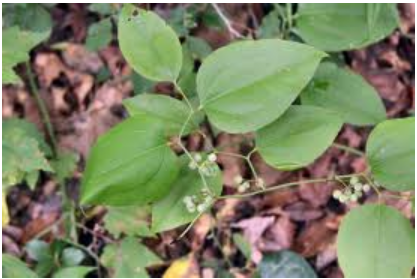
3. Greenbrier-Similax rotundifolia
4. Lambsquarters-Chenopodium album
5. Burdock-Arctium minus

Dandelion
In New Jersey we start picking tender, succulent dandelions on southern slopes in early
March. Dandelions are ubiquitous and can be found almost anywhere in the world. The rest of
the world relishes this wild treat. In Italian we would say "chicoria," somewhat descriptive of the
chicory-like leaves of dandelions. An interesting note is the constant increase in the production of
domestic dandelions in vegetable growing areas of the United States.
What do you do with a dandelion? Eat it fresh in salad, use it as a vegetable, a main
course, or drink it! The youngest plants - those without flowers - are prime. They make the best
salad with a dressing of your choice. Dutch style provides a hot dressing of chopped bacon bits,
bacon drippings, sugar and vinegar to taste. The hot mix is simply poured over freshly cleaned
dandelions and blended together.
As we move from the fresh product, an important lesson is worth learning. Steam, do
not
boil, vegetables. Boiling effectively removes large quantities of water
soluble vitamins and
minerals. Steam helps to preserve the nutritional qualities, along with
the fine, delicate flavors
and textures. Steam the dandelion greens until tender and serve as you
would domestic greens -spinach, Swiss chard, etc. The difference here
is that the dandelions are fresh, free, and they don't
come in plastic bags!
Now for the Sicilian treatment. Take the drained, steamed dandelions or any other green
that you wish to use, and cut them into half -inch pieces. Mix them with just enough beaten egg
to hold the greens together. Add your favorite Italian grated cheese to taste and a touch of finely
chopped garlic. Form hamburger-like patties with a large spoon or with your hands. Fry the
patties in olive oil. Drain. Here is another good tip: always drain fried food on a cake rack for a
nice dry all-over texture. My only problem is not being able to cook enough dandelion cakes for
my family and students. This style, or cuisine, is reflective of Sicily. Limited quantities of wild or
garden vegetables, combined with small quantities of eggs and cheese, are artfully stretched to
provide a balanced meal for a family.
If you are planning to eat dandelion greens, fresh or raw, harvest only up to the flowering
stage. Plant chemistry changes considerably when the flowers are in bloom. But don't stop now.
Wait for full bloom, and begin the dandelion wine process. The wine is made from the golden
blossoms. The following recipe is from the Dutch side of the family. They settled in New Jersey
over two hundred years ago.
DANDELION WINE
10 quarts blossoms, no stems
15 quarts water
Boil water, add blossoms and remove from heat. Allow to stand overnight. Next day simmer for one hour. then
strain and retain only the liquid.
Add ten pounds of sugar, eight
sliced oranges, eight sliced lemons, two pounds of raisins. Place in
large crock or
plastic container. Ferment for nine days. Stir twice a day. Place in
bottles or jars until fermentation is complete. If the first
fermentation does not begin within one or two days, add a cake of
bakers' yeast or dry yeast.
Do not seal the jars at this point. After the second fermentation has stopped in the jar or bottle (the time interval
depends on the temperature of fermentation), remove sediments by siphoning off the liquid into clean bottles. Again, allow the
bottle cap to remain loose until no further fermentation takes place. Seal the bottles, store away, and
prepare for some old
"medication"!

Burdock
Burdock starts to grow in early May in New Jersey. The plant is characterized by large,
rhubarb-like leaves and edible stems and roots. This is another plant species enjoyed by the rest
of the world. in Africa it is known as "gobo." To Italians it is "cardone." The best part is the
young, succulent stem. Don't eat the leaves. Try the roots. . . they're okay as a steamed
vegetable but not as good as the stems. Cut the stems into half-inch pieces and steam until tender.
Proceed to use the Sicilian formula with the eggs, cheese, garlic and olive oil. You may also
enjoy burdock in stews, soups, or served as a cooked vegetable.
Pokeweed
I predict that pokeweed will be completely removed from the wild scene when discovered
as a good vegetable. Prepared and served as asparagus, and alongside of asparagus, people will
select pokeweed almost every time. The highly succulent, tender, sweet shoots are harvested in
the early spring. Pick the shoots up to eighteen inches in length. Strip off all the leaves beginning
at the base. Stripping downward removes some of the outside cuticle in the process. Retain the
leaves in the whorl at the tip. Cook them along with the stems. if you say pokeweed is poisonous,
you're right. The plant contains an alkaloid - phytolacin. Fortunately, the alkaloid is highly
soluble and can be easily extracted from the plant tissue. The alkaloid is generally concentrated in
the roots, fruits, and leaves and, to a lesser extent, in the stems and young shoots. Cut the
prepared shoots into two-inch segments and - break a rule - boil for thirty seconds. Pour off the
water and proceed to steam until tender. Serve as you would asparagus, as a vegetable, in soups,
or try the Sicilian treatment.

Lambsquarters
Lambsquarters is probably the closest relative to spinach only it's better! Taste tests
continue to indicate a high preference for lambsquarters over spinach. Steam and serve. In New
England, lambsquarters is canned for winter use. Pick out only the young shoots or allow a
couple of large plants to grow and continue to harvest the new side shoots. The more you pick,
the more lateral budding is induced.

Greenbrier
The best is saved for last - greenbrier, Rapidly growing vine tips are harvested in the
spring and summer. Snap them off the ends of the vine with your fingers. They will crack where
the tender shoot extends out from last year's woody tissue. Serve as a hot vegetable, add fresh to
a lettuce salad, or use the "treatment." This is another Italian delicacy, also known as "rauni." it's
hard to believe that such a fine, delicate treat as similax comes from a thorny, green bramble
tough enough to be used as a cattle fence.
Not all weeds taste good or are pleasant textured. And be very cautious to avoid plants or
plant parts that are poisonous. We spend little time foraging among the sticks and stones and
concentrate on the many good and edible plants.
An extended list of eating delicacies include the highly underutilized wild onion, Allium
vineale; chickweed, Stellaria media; yellow rocket, Barbarea vulgaris; watercress, Nasturtium
officinale; day lily, Hemerocallis fulva, and many others.
Your introduction to edible plants may serve as an entryway to an exciting, dynamic
career in plant sciences. From the fields and byways, the classroom and laboratory ... bon apetit!

Purslane
Comment by Scott Bloom
- Purslane contains more omega-3 fatty acids (alpha-linolenic acid in particular[4]) than any other leafy vegetable plant. Research published by Artemis P. Simopoulos states that Purslane has 0.01 mg/g of eicosapentaenoic acid (EPA). This is an extraordinary amount of EPA for a land-based vegetable source. EPA is an Omega-3 fatty acid found mostly in fish, some algae, and flax seeds.[5] It also contains vitamins (mainly vitamin A, vitamin C, and some vitamin B and carotenoids), as well as dietary minerals, such as magnesium, calcium, potassium, and iron. Also present are two types of betalain alkaloid pigments, the reddish betacyanins (visible in the coloration of the stems) and the yellow betaxanthins (noticeable in the flowers and in the slight yellowish cast of the leaves). Both of these pigment types are potent antioxidants and have been found to have antimutagenic properties in laboratory studies.[6]
100 Grams of fresh purslane leaves (about 1 cup) contain 300 to 400 mg of alpha-linolenic acid.[7] One cup of cooked leaves contains 90 mg of calcium, 561 mg of potassium, and more than 2,000 IUs of vitamin A. A half-cup of purslane leaves contains as much as 910 mg of oxalate, a compound implicated in the formation of kidney stones, however, note that many common vegetables, such as spinach, also can contain high concentrations of oxalates.
When stressed by low availability of water, purslane, which has evolved in hot and dry environments, switches to photosynthesis using Crassulacean acid metabolism (the CAM pathway): At night its leaves trap carbon dioxide, which is converted into malic acid (the souring principle of apples), and, in the day, the malic acid is converted into glucose. When harvested in the early morning, the leaves have ten times the malic acid content as when harvested in the late afternoon, and thus have a significantly more tangy taste.
Purslane (Portulaca oleracea), raw, fresh,
Nutritive value per 100 g.
(Source: USDA National Nutrient data base)Principle Nutrient Value Percentage of RDA Energy 16 Kcal 1.5% Carbohydrates 3.4 g 3% Protein 1.30 g 2% Total Fat 0.1 g 0.5% Cholesterol 0 mg 0% Vitamins Folates 12 µg 3% Niacin 0.480 mg 3% Pantothenic acid 0.036 mg 1% Pyridoxine 0.073 mg 5.5% Riboflavin 0.112 mg 8.5% Thiamin 0.047 mg 4% Vitamin A 1320 IU 44% Vitamin C 21 mg 35% Electrolytes Sodium 45 mg 3% Potassium 494 mg 10.5% Minerals Calcium 65 mg 6.5% Copper 0.113 mg 12.5% Iron 1.99 mg 25% Magnesium 68 mg 17% Manganese 0.303 mg 13% Phosphorus 44 mg 6% Selenium 0.9 µg 2% Zinc 0.17 mg 1.5%
Harvesting Wild Thistle
Michigan Bio-Char
What Weeds Tell Us About The Soil
Those nasty weeds, always
complicating our lives and making more work for us than what we desire.
Weeds are bad…..right? Well, not all of them. Simply put, the
definition of a weed is “a plant out of place.” It’s good to think of
them that way because some of those plants are edible and very healthy
for you! So, it’s really not a bad idea to learn about weeds and their
effects on your diet as well as their effect on your garden. Let’s take
a look at some common weeds that you probably have growing in your
garden.
DANDELIONS.
Believe it or not, these critters are beneficial weeds! They are
edible, and can be found usually in salads. They are beneficial because
they add good minerals  to
the soil. They attract pollinating insects, and release ethylene gas,
which helps fruits to ripen. Dandelions also have been used as medicines
for such ailments as infections, liver problems, and cancers.
to
the soil. They attract pollinating insects, and release ethylene gas,
which helps fruits to ripen. Dandelions also have been used as medicines
for such ailments as infections, liver problems, and cancers.
 to
the soil. They attract pollinating insects, and release ethylene gas,
which helps fruits to ripen. Dandelions also have been used as medicines
for such ailments as infections, liver problems, and cancers.
to
the soil. They attract pollinating insects, and release ethylene gas,
which helps fruits to ripen. Dandelions also have been used as medicines
for such ailments as infections, liver problems, and cancers.
MORNING GLORY.
Does this plant have any uses? It is on the Federal Noxious Weed list,
and technically it is illegal to grow, import, sell, or even have in
your possession. It is edible, being known in southern states as water
spinach. The Morning Glory grows fast and tolerates poor, dry soils.
Some species vine, and are used for creating shades on building walls,
helping to reduce heating and cooling costs. The roots do have minerals
which can be returned to the soil when composted.
CHICKWEED.
If you have chickweed growing in your garden, it is a good indication
of some very good soil. This plant has a tendency to accumulate some
great minerals such as potassium and manganese, which return to the soil
upon decomposition. They are edible, commonly being used in salads.
CLOVER.
This plant indicates low fertility in your soil, especially low
nitrogen levels in the soil it grows in. It is used a lot as a cover
crop. Farmers will use clover to help control soil and water quality,
weeds, pests, and diseases.
DOCK.
This weed indicates a poorly drained soil that is becoming acidic. Some
species are nuisance weeds, but others are edible. There are not that
many known uses for this particular plant.
HORSETAIL.
This weed is widely known as a nuisance weed. It is difficult to get
rid of, even after pulling it out as it grows deeply into the ground. It
grows in poor, acidic soil. However the Horsetail does accumulate some
good minerals which go back into the ground when it decomposes.
Increasing the PH level in your soil will do a lot to get rid of this
pest.
VETCH
This plant also indicates a poor soil that is low in nitrogen. Like
some of the other weeds, it does accumulate some good minerals which go
back into the soil. It is a plant that is occasionally used as a cover
crop also. There are no other good uses for this particular weed.
QUACK GRASS.
Not much to say about this particular plant. It is hard to get rid of
because of the creeping rhizomes (underground root system) which allow
it to grow quickly. Quack Grass is usually considered an invasive weed. A
sick dog will dig it up and eat the roots to cure its ailments. It has
been used in herbal medicine since the time of the Greeks.
THISTLE.
This particular weed usually is found in compacted soil. Butterflies
like these plants. The Thistle is the national emblem of Scotland. It is
also the emblem of Encyclopedia Britannica, which originated in
Scotland. Other than that, no medicinal uses and you surely do not want
to eat it!
SORREL.
Yet another type of weed that exists in soil that is acidic and low in
lime. The leaves of this product can be found in soups, salads, and
sauces. In little quantities, it is harmless for human consumption.
However, if a person ingests too much of this weed, it can be fatal.
Oxalic acid, which is a poison, is found in Sorrel; thus, the reason why
a large quantity can be deadly to the person eating it.
PLANTAIN.
Here is another one of nature’s products that is found in acidic,
compacted, and low fertility soil. This plant has been used since
prehistoric times as an herbal remedy. Other than that, not an item you
want to find in your soil.
Make sure you are careful if you are
thinking about eating the plants that are listed as edible. There are
many species of each plant, and you want to make sure you are eating the
right one. Talk to a master gardener or well experienced produce person
to get the right answers. You know the saying “if you can’t beat ‘em,
join ‘em?” In this case it’s more like “if you can’t weed ‘em, eat
‘em.” Just section off a part of your garden and grow some of these
pesty weeds. Nurture them along with some water during the hot months
and you’re all set. Happy gardening!

This entry was posted in Home Gardening, Soils by Jesse and tagged chickweed, clover, dandelion, diet, dock, garden, horsetail, morning glory, plantain, quackgrass, sorrel, thistle, vetch, weeds. Bookmark the permalink.
Thursday, May 31, 2012
Seedling Care
Sometimes my seeds sprout but then die. These videos appear to have some good information.
Tuesday, May 29, 2012
Aeration And Water Movement
 |
| These plants thrive right above the air stone! (LINK) |
I asked Forest, my friend and hydroponic guru, if it might be due to water movement. He felt strongly that it's the improved oxygen in the water rather than water movement. I'm still on the fence about that, but Forest really knows about hydroponics so I tend to believe what he says.
But this has gotten me thinking about adding an aquarium PowerHead and/or incorporating an Under-Gravel Jet System as described at this link. The Under Gravel Jet appears to be very similar to a Fluidized Sand Filter.
I found this article about designing a Fluidized Sand Filter.
Further research shows that they can be designed to remove Nitrates as well as Ammonia and Nitrites. This of course is not what we would desire in an aquaponic system, but it appears easy enough to avoid removal of Nitrates by not building the filter too deep.
Devin uses very large 12" air stones in his raft tanks under the gravel. Yes he places gravel in the bottom of his Floating Raft tanks. His results are astounding and I tend to agree with Devin about Rafts vs Gravel beds. Transplants do better when placed into a raft and growth rates seem to be better, and with good aeration the raft systems can only be improved.
I bought a Hydrofarm Active Air Pump.
It's a bit noisy but an optional volume control can turn adjust the volume and the noise.
* UPDATE October 10, 2012 - This Hydrofarm pump has been running 24/7 for 4-1/2 months. It progressively became louder until it sounded like a jack hammer. Two days ago I turned it off and replaced it with a new EcoPlus Commercial Air 5. Even after rebuilding it with parts supplied by the distributor it was no longer working properly. I have high hopes for the new EcoPlus Commercial Air 5. It runs much cooler than the Hydrofarm pump which ran so hot I could not even touch .
The new EcoPlus Commercial Air 5. is by no means silent, but it purrs with a low tone rather than a raspy and unpleasant noise.
 |
| The noise was too much so I placed the air pump inside my shop and plumbed the line out to the system |
Today I placed four fat air stones in this raft tank under about 4 inches of gravel.
It's about time to make some better rafts 8-)
Tuesday, April 17, 2012
How to Trim a Tomato Plant | Garden Guides
I planted tomato as an experiment. I wanted to see if they would grow, and set fruit indoors, but it is becoming obvious that I will need to do some trimming as I don't have the space they require.
This article is short and simple. It describes the method of trimming indeterminate tomato plants in order to produce a better quality crop.
Basically the method involves breaking off the suckers in order to direct the energy to the main stem.
Other sources indicate that these suckers can then be propagated and grown as individual plants which will space out the peak production over a wider time.
Some may disagree with the use of a knife or shears, opting to break the suckers off because it is less likely to cause infection and spread disease.
If the suckers continue to grow back it is important to continue breaking them off. In addition to breaking off suckers some also recommend topping the plant near the end of the growing season in order to let the last few tomatoes mature and ripen.
How to Trim a Tomato Plant | Garden Guides
This article is short and simple. It describes the method of trimming indeterminate tomato plants in order to produce a better quality crop.
Basically the method involves breaking off the suckers in order to direct the energy to the main stem.
Other sources indicate that these suckers can then be propagated and grown as individual plants which will space out the peak production over a wider time.
Some may disagree with the use of a knife or shears, opting to break the suckers off because it is less likely to cause infection and spread disease.
If the suckers continue to grow back it is important to continue breaking them off. In addition to breaking off suckers some also recommend topping the plant near the end of the growing season in order to let the last few tomatoes mature and ripen.
How to Trim a Tomato Plant | Garden Guides
Wednesday, April 11, 2012
Yellow Mottling on my Spinach Plants
Update 2012/12/23
In this post I examined and searched for the cause of yellow mottling on these spinach leaves. Finally I found that the cause was an Iron deficiency. In the months that followed I posted several more articles with good information about this and other nutrient related signs, problems, and solutions.
For a scientific explanation of the chemistry behind the bio availability of Iron go to
[Are These Rocks Nutrient Theives?]
and
[Assimilation of Nutrients]
For a detailed yet condensed collection of charts and facts go to Nutrient Deficiencies
Below is a record of my wondering search while I learned what I needed to know. I would prefer to simply delete it, but you may relateto my learning curve and find something interesting along the way.
Update 2012/06/07
I'm still having problems with yellow leaves. I have brought my PH down from 8.2 to 6.6 and I have no salt in the system I have also added 1/2 a bottle of Microbe Lift Chelated Iron. I'll Send an update in a few days with the results. I have more iron on order as well as a GH/KH test kit. Hopefully I will get this figured out.
Update 2012/04/14
"A plant injured by excessive sodium first displays mottled leaves or yellowed tissue between the veins of leaves. This is followed by leaves that are dead at their tips, at their margins, and in areas between their veins." - WateReuse Foundation

My search for the cause continues. I had not seen any insects so I hung sticky cards to trap them. All I got was two mosquitoes. Several weeks ago I pushed my salt levels up to 0.35% because I had a few fish that were damaged during the transfer to the aquaponic tank.
I've been bringing the salt level down slowly and it is now at 0.20%. In the past when I bumped salt levels up in my pond I did not notice any damage to my ornamental plants, but Spinach and Tomatoes may have a lower tolerance.
I will begin to lower the salt level over the course of the next week and see if the new sprouts show any of the same signs.
Further information:
http://salinitymanagement.org/Salinity%20Management%20Guide/index.html
Update 2012/04/12
After receiving assistance from Zalinda Farms Inc. , I now believe the problem may be caused by Thrip.
If not this information is still a value. Keeping a vigilant eye on the crop is always important and Thrip is just one of condition to look for.

I have yet to actually see the Thrip, so I will purchase some Sticky Cards. If I find Thrip I will use Monterey Garden Spray to control the pests. The literature indicates that it is a safe bacteria.
Nature's Control also offers several solutions. One is Predator Nematodes

but in an aquaponic system this may not be an option. The instructions state "The important things are to use them within 2 hours of mixing, because after that they start to drown". ... " They'll live longest when the soil stays moist, but not saturated with water."
I suspect they might be washed away into the water each time the grow bed ebbed and flowed.

"Thrips Predator Mites (Amblyseius cucumeris) are most effective under conditions of 70-85% humidity, against all species of Thrips. They will also eat an occasional Spider Mite, and other small pests. However, reports have been poor in low humidity environments, so use these predators in greenhouse and other interior locations with high humidity levels only. "
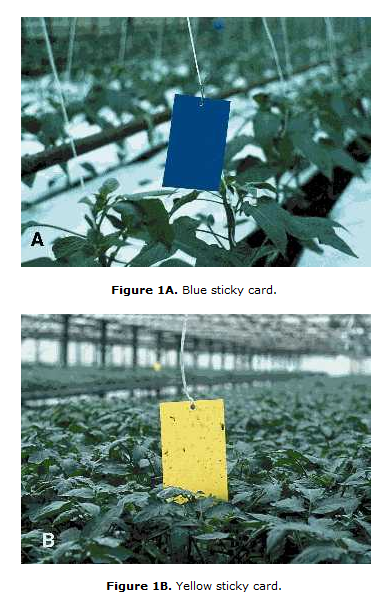
Two types of sticky Traps are also offered by Nature's Control. They say "Customers report success using Sticky Blue Traps against Thrips & Leafminers. Especially recommended for use on roses."

I found further information at
http://biocontrol.ucr.edu/wft.html
The definitions of INSV and TSWV are as follows:
Vectoring of plant diseases. Western flower thrips is a vector of many plant diseases, the most important of which for greenhouse producers are two plant viruses in the genus Tospovirus: impatiens necrotic spot virus (INSV) and tomato spotted wilt virus (TSWV)
Original Post
I wonder if anyone can help me diagnose this problem I'm having with my spinach.
I suspect either a lack of light, salt burn from treating my fish, or a bug, but I see no bugs.
 My spinach leaves are mottled with yellow.
The orange arrow points to a very small white area that I found behind the stem of a leaf I removed. It looks like foam.

The underside of this leaf has very small round white spots. This picture is through a magnify glass.
Subscribe to:
Posts (Atom)