Saturday, April 14, 2012

Friday, April 13, 2012

Compassionate Killing of Fish

 If you raise fish for food you will need to kill them.  
There are many methods.  
Some are cruel and inhuman.  
Below you will find links that demonstrate how to kill your fish.

Aqui-S is a safe and easy solution which appeals to me.  
http://www.aqui-s.com/


The following is an excerpt from:

THE WELFARE OF INTENSIVELY FARMED FISH
A Report for
COMPASSION IN WORLD FARMING TRUST
Philip Lymbery
Animal Welfare Consultant
February 2001


Starvation & Slaughter

Farmed fish are normally starved for about 7-10 days before slaughter. It is said that
this is to empty their gut and minimize the risk of the flesh becoming contaminated
when gutted. However, gut clearance only takes 24-72 hours. Farmed fish are
conditioned over months and years to expect frequent and plentiful feed. To suddenly
cut off that feed is likely to be detrimental to their welfare. CIWF Trust believes that
starvation periods of longer than 72 hours should be prohibited.


About 40 million salmon and 30 million trout are slaughtered annually in the UK.
That represents more animals than all the pigs, sheep, cattle and turkeys killed
altogether. Some widely used slaughter methods for farmed fish cause appalling
suffering. So much so that the perpetrators would be prosecuted if they were
slaughtering other farm animals in a similar way. Widely used slaughter methods in
the trout industry, for example, include the suffocation of fish in air or on ice. In the
latter method, the cooling effect of the ice prolongs the time it takes for the fish to
become unconscious, with fish being able to feel what is happening to them almost 15
minutes after being taken out of the water. The Government’s advisory Farm Animal
Welfare Council (1996) condemned this killing method, recommending that it be
prohibited. Nearly five years on, it remains widely used.


Another inhumane slaughter method often used for salmon and trout is the use of
carbon dioxide stunning. The bath of carbon dioxide saturated water causes the fish
to thrash around the killing container. They stop moving after 30 seconds, but do not
lose consciousness for 4-9 minutes. Salmon usually have their gills cut after stunning
and are allowed to bleed to death. The prolonged procedure is inhumane in itself.
However, as carbon dioxide causes immobility long before unconsciousness, there is
a real danger that fish remain conscious but unable to move as they are bleeding to
death.

Inhumane and totally unacceptable slaughter methods, that can take a long time for
fish to lose consciousness and die, should be prohibited urgently. These include
suffocating fish in air or on ice, bleeding to death without pre-stunning, and the use of
carbon dioxide for stunning.


Only slaughter methods that cause an instant death or render the fish instantly
insensible to pain until dead should be permitted. These include percussive stunning
techniques whereby fish are rendered instantly unconscious when carried out
efficiently.
Also electrocution methods where properly designed and carried out
effectively. In the case of electrocution, the electric current must be sufficient to stun
and kill the fish otherwise considerable suffering could result.


_____________________________________________________________
Further information can be found at
http://fishcount.org.uk/fish-welfare-in-commercial-fishing/humane-slaughter

http://www.daff.gov.au/__data/assets/pdf_file/0017/152108/aaws_stocktake_aquatic.pdf

_____________________________________________________________
These videos show how it can be done and demonstrate the difficulty involved.
How to Perform a Head Spike 
How to Bleed a Fish after the Head Spike
Clubbing a Large Fish
Clubbing and Bleeding
Cutting the Head Off
The Humane Way to Kill a Cray
Still Alive and Feeling Pain?


While searching for this information I found some of the most disgusting and cruel video where people were amused at the pain, and suffering of various animals.  I don't even wish to understand what these people were thinking.   Please be as humane as possible.

Wednesday, April 11, 2012

Yellow Mottling on my Spinach Plants


Update 2012/12/23
In this post I examined and searched for the cause of yellow mottling on these spinach leaves.   Finally I found that the cause was an Iron deficiency.  In the months that followed I posted several more articles with good information about this and other nutrient related signs, problems, and solutions.

For a scientific explanation of the chemistry behind the bio availability of Iron go to
[Are These Rocks Nutrient Theives?]
and
 [Assimilation of Nutrients]

For a detailed yet condensed collection of charts and facts go to Nutrient Deficiencies

Below is a record of my wondering search while I learned what I needed to know. I would prefer to simply delete it, but you may relateto my learning curve and find something interesting along the way.


Update 2012/06/07
I'm still having problems with yellow leaves.   I have brought my PH down from 8.2 to 6.6 and I have no salt in the system   I have also added 1/2 a bottle of Microbe Lift Chelated Iron. I'll Send an update in a few days with the results.   I have more iron on order as well as a GH/KH test kit.   Hopefully I will get this figured out.

Update 2012/04/14
"A plant injured by excessive sodium first displays mottled leaves or yellowed tissue between the veins of leaves. This is followed by leaves that are dead at their tips, at their margins, and in areas between their veins."  - WateReuse Foundation

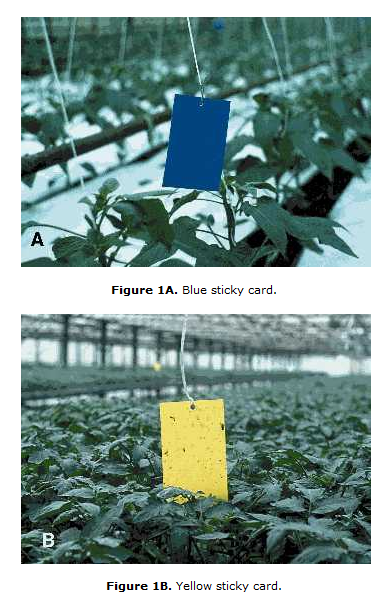
My search for the cause continues. I had not seen any insects so I hung sticky cards to trap them.  All I got was two mosquitoes.  Several weeks ago I pushed my salt levels up to 0.35% because I had a few fish that were damaged during the transfer to the aquaponic tank.

I've been bringing the salt level down slowly and it is now at 0.20%.  In the past when I bumped salt levels up in my pond I did not notice any damage to my ornamental plants, but Spinach and Tomatoes may have a lower tolerance.

I will begin to lower the salt level over the course of the next week and see if the new sprouts show any of the same signs.

Further information:
http://salinitymanagement.org/Salinity%20Management%20Guide/index.html


Update 2012/04/12
After receiving assistance from Zalinda Farms Inc. , I now believe the problem may be caused by Thrip.
If not this information is still a value.  Keeping a vigilant eye on the crop is always important and Thrip is just one of condition to look for.


I have yet to actually see the Thrip, so I will purchase some Sticky Cards.  If I find Thrip I will use  Monterey Garden Spray to control the pests.  The literature indicates that it is a safe bacteria. 

Nature's Control also offers several solutions.  One is Predator Nematodes


but in an aquaponic system this may not be an option.  The instructions state "The important things are to use them within 2 hours of mixing, because after that they start to drown".  ... " They'll live longest when the soil stays moist, but not saturated with water."
I suspect they might be washed away into the water each time the grow bed ebbed and flowed.


Another solution is this Pirate Bug shown above.  They too are susceptible to environmental conditions.
"Thrips Predator Mites (Amblyseius cucumeris) are most effective under conditions of 70-85% humidity, against all species of Thrips. They will also eat an occasional Spider Mite, and other small pests. However, reports have been poor in low humidity environments, so use these predators in greenhouse and other interior locations with high humidity levels only. "


Two types of sticky Traps are also offered by Nature's Control.  They say "Customers report success using Sticky Blue Traps against Thrips & Leafminers. Especially recommended for use on roses."


I found further information at 
http://biocontrol.ucr.edu/wft.html
The definitions of INSV and TSWV are as follows:
Vectoring of plant diseases. Western flower thrips is a vector of many plant diseases, the most important of which for greenhouse producers are two plant viruses in the genus Tospovirus: impatiens necrotic spot virus (INSV) and tomato spotted wilt virus (TSWV)


Original Post
I wonder if anyone can help me diagnose this problem I'm having with my spinach.
I suspect either a lack of light, salt burn from treating my fish, or a bug, but I see no bugs.
My spinach leaves are mottled with yellow. 

The orange arrow points to a very small white area that I found behind the stem of a leaf I removed.  It looks like foam.

The underside of this leaf has very small round white spots.  This picture is through a magnify glass.

Thursday, April 5, 2012

Cycled in 4 days!

I just cycled a new 40 gallon aquarium with a 10 gallon wet/dry sump tank in four days by using water and media from my aquaponic system.

Day 1 Ammonia = 0.50 Nitrite = 2.0
Day 2 Ammonia = 0.25 Nitrite = 2.0   (added more urea)
Day 3 Ammonia = 0.00 Nitrite = 5.0  (this is the Nitrite spike)  (added more urea)
Day 4 Ammonia = 0.00 Nitrite = 0.0  (Wow,  I've never had it happen so fast)
The water was kept at 75F.

Inoculating with good strong culture from an established system will greatly speed up the time it takes to cycle a new system.  This time the aquarium was filled with water from the aquaponic system, and I used a small activated carbon filter about 4" x 6" that I had been using to disperse the water with as it poured into the aquaponic grow bed to inoculate the aquarium..

I have also notice that a wet/dry sump is especially helpful compared to a letting the water flow through all of the media.  

It's not real pretty,  but this is my bio filter.  I used a couple baskets filled with new Hydroton, you can see it is still floating.   One basket is submerged while the other is above the water level  (wet/dry sump).

My aquaponic system uses ebb and flow, but I've seen better results when I duplicate a wet/dry sump by not completely draining the grow bed.
.  


Keeping a log

Keeping a record of your water chemistry and environment can help you understand the cause of any problems you may have later.

Here is a spreadsheet that I use to record my data.

You may choose to take samples less often, but since my system is still new I feel that every day is best for me.

Edit as you see fit.

This is an Open Office Spread Sheet.   (Please support Open Source programing and information.)


Tuesday, April 3, 2012

Activated Carbon Filters

How does a carbon filter benefits an aquarium?
Activated Carbon is amazing!  The surface area is enormous and this allows bacteria to grow much faster and more dense.  Just as we choose a porous rock for our grow beds (bio filters), activated carbon is  an ideal surface for bacteria. It's not all good because activated carbon can also grow bad bacteria that is not beneficial to our systems, but with proper care, and aeration we can avoid many of these harmful bacteria

Depending on the ionization of the carbon it also has the ability to capture a lot of impurities. For example most activated carbon filters are very good at neutralizing chlorine.

Activated carbon filters will not remove microbes, salts or nitrites, but most organic chemicals have large molecules and due to the pore size of activated carbon many of the impurities we wish to avoid are converted in the activated carbon filter.

This is how it works in an aquarium, but in an aquaponic system the goal is to utilize as much grow space as possible.   3/4" media has been proven to work best.   There are many choices of 3/4" media and I tend not  to enjoy running my hands through crushed rock. I have found smooth rock works just fine.  But recently there is a new idea being used called Bio-Char.